Co-Designing the Future of Metropolitan Areas: How can we make it happen? MICAD at the New Mobility Congress in Katowice
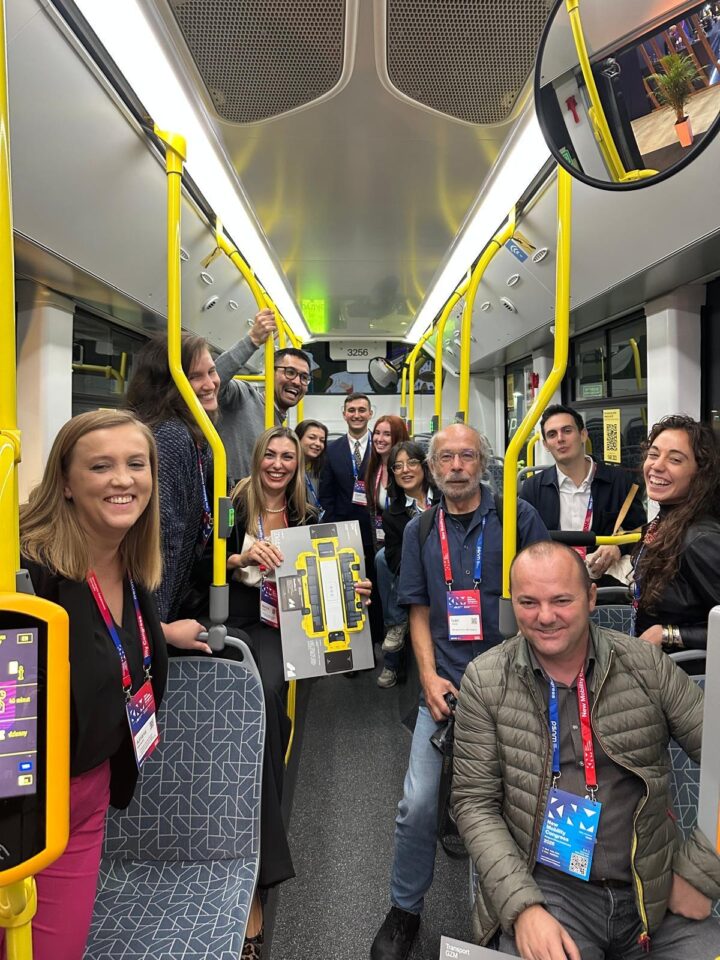

How can metropolitan areas strengthen cooperation to advance the twin transition? And what does it take to turn climate and digital transition strategies into concrete, coordinated action?
Metropolitan areas are experiencing continuous social, political, economic and environmental transformations that cannot be addressed in isolation. As climate and digital transitions reshape territories, effective responses increasingly depend on the ability of different levels of governance to work together, align priorities and coordinate action across institutional boundaries.
An integrated governance approach is therefore essential to making multi-stakeholder cooperation effective and ensuring that transition policies translate into tangible benefits for local communities. This means bringing together local and metropolitan authorities, residents, academia and the business sector, while placing social inclusion and citizens’ needs at the heart of decision-making.
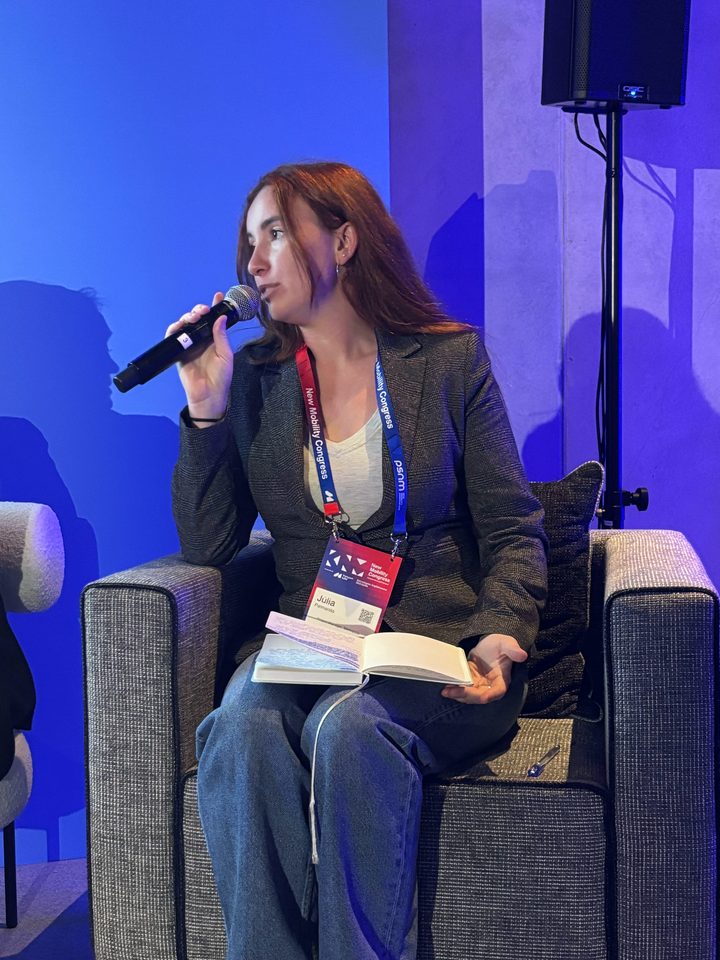
These questions were at the centre of the panel discussion “Moving Metropolises Forward Together”, held during the New Mobility Congress in Katowice, Poland, with the participation of several partners from the MICAD consortium. Moderated by Jùlia Palmarola, MICAD Project Coordinator representing Metropolis, the interactive roundtable explored how metropolitan governance can support the twin transition by addressing the challenges of coordination, stakeholder engagement and institutional capacity.
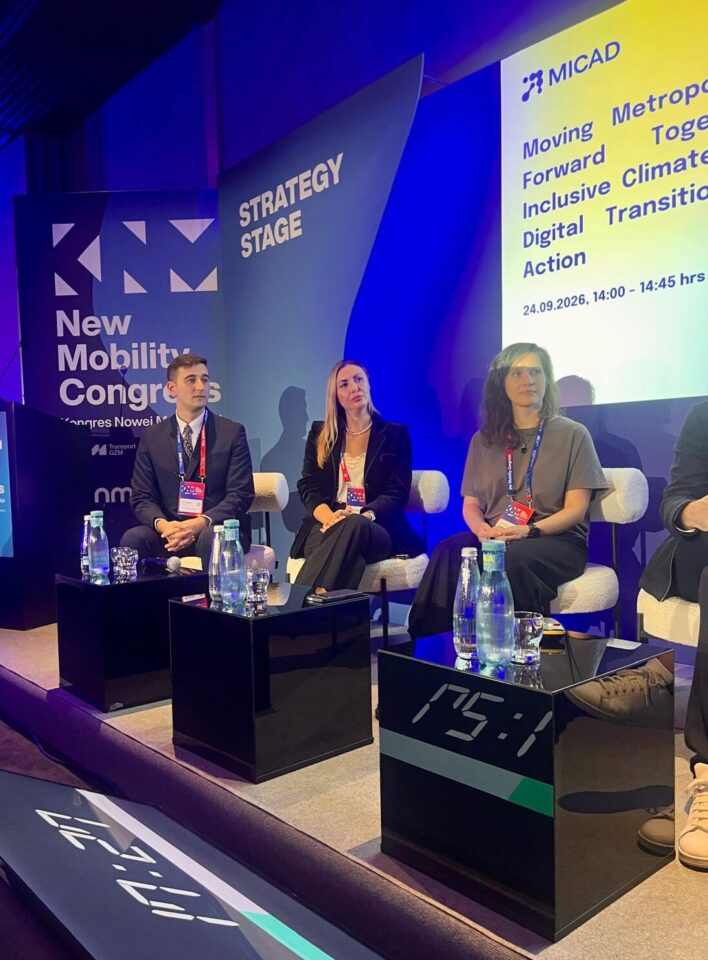
Some metropolitan areas involved in MICAD presented their experiences, illustrating the specific challenges their territories face in implementing climate and digital transition strategies.
Adriana Witkowska, representing GZM Metropolis – Górnośląsko-Zagłębiowska Metropolia (Poland), presented GZM’s roadmap perspective focused on waste management. She highlighted the importance of changing citizens’ behaviour to encourage the separate collection of bio-waste in multi-family households. Representing a metropolitan area comprising 41 municipalities, the organisation aims to understand the barriers to bio-waste separation and identify practical measures to make it a more common habit. Through MICAD, it is developing a roadmap combining citizen surveys, information campaigns and support measures. The initiative also explores the potential of bio-waste as a resource for more sustainable transport, reflecting the ambition to create a circular approach. By testing solutions locally and learning from other European metropolitan areas, the aim is to develop an approach that can be scaled up across the wider metropolitan area.
Mikel Berra, representing Àrea Metropolitana de Barcelona (AMB), highlighted the importance of a coordinated approach to the digital transition, stressing the need to overcome fragmented digital services and data platforms. Through its digital roadmap, the metropolitan area of Barcelona aims to develop a more coherent strategy that improves accessibility and ensures the same quality of services across all 36 municipalities that are part of the metropolitan territory, regardless of their size. Building in-house digital capacity and strengthening cooperation with private-sector providers remain key challenges in this process. MICAD, in this context, offers a valuable space for exchange, inspiration and shared learning to advance towards a more integrated metropolitan future.
Bogdan Cazacu, representing Chișinău Municipality (Moldova), highlighted the specific challenges facing the city as Moldova moves beyond its Soviet-era legacy towards a more sustainable future. Within MICAD, the municipality aims to address the fragmentation of existing climate initiatives by developing a more coherent roadmap, informed by an assessment of local, national and European priorities. Key challenges include improving the energy efficiency of ageing buildings, promoting more sustainable mobility and addressing increasing heat risks. Citizen participation is central to this process, helping residents understand how the climate transition affects their daily lives and fostering a sense of ownership over the roadmap and the measures the municipality will implement.
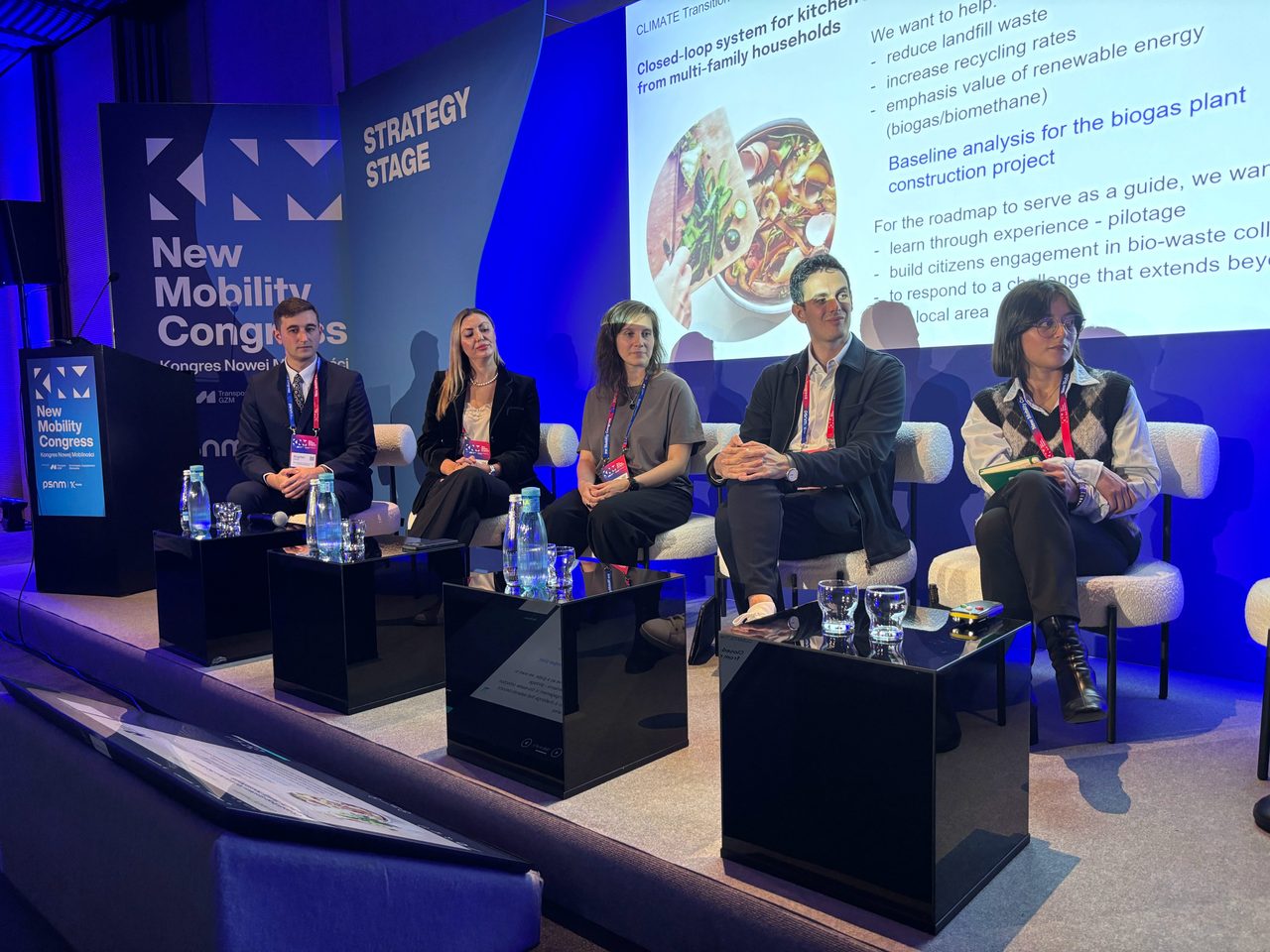
While each metropolitan area faces different challenges, their experiences point to a shared need: climate and digital transitions cannot be managed within administrative boundaries alone. As highlighted by Iván Tosics from MRI – Metropolitan Research Institute (Hungary), cities often serve far more people than their registered residents, creating pressures on mobility, infrastructure and public services that require cooperation with surrounding areas. Climate and digital transitions can provide a common starting point for building these partnerships, as they create shared challenges and mutual interests across territories.
Drawing on research findings and practical experience, MICAD’s knowledge partners encouraged participants to reflect on the capacities metropolitan authorities need to navigate complex transitions, the stakeholders who should be involved at different stages, and the conditions required to turn transition roadmaps into actionable governance tools.
As underlined by Anastasia Ponomareva from HES-SO – University of Applied Sciences and Arts Western Switzerland, the lack of coordination across metropolitan governance departments is still a crucial issue, as technical capacities are there, data are there, but structured coordination is still missing and necessary. A good coordination mechanism, together with a clear learning process can support the scaling up of innovative projects’ results and their consequent transferability.
Meaningful stakeholder participation is essential to ensure that transition policies respond to people’s actual needs and do not reinforce existing inequalities. As Michelle Gonzalez Torres from ENoLL – European Network of Living Labs (Belgium) emphasised, citizens must be involved because they experience the effects of climate and digital transitions in their everyday lives.
“This is such a complex issue that we cannot rely only on those who manage the transition from a political perspective. We need to involve citizens, who are the ones living the transition in their daily life”.
A key challenge is ensuring that roadmaps go beyond the strategic level and become embedded in existing governance structures and decision-making processes. This requires clear responsibilities, stronger coordination mechanisms, meaningful stakeholder participation and the institutional capacity to translate shared objectives into feasible actions, even within complex and often bureaucratic administrative systems.
“The roadmap metropolitan areas are developing within the MICAD project is not just a document that you fill in and put on the shelf. It should be understood as a living management tool that can change over time in parallel with the transition process” Maryna Gorobei, representing UTA – Urban Technology Alliance (Switzerland)
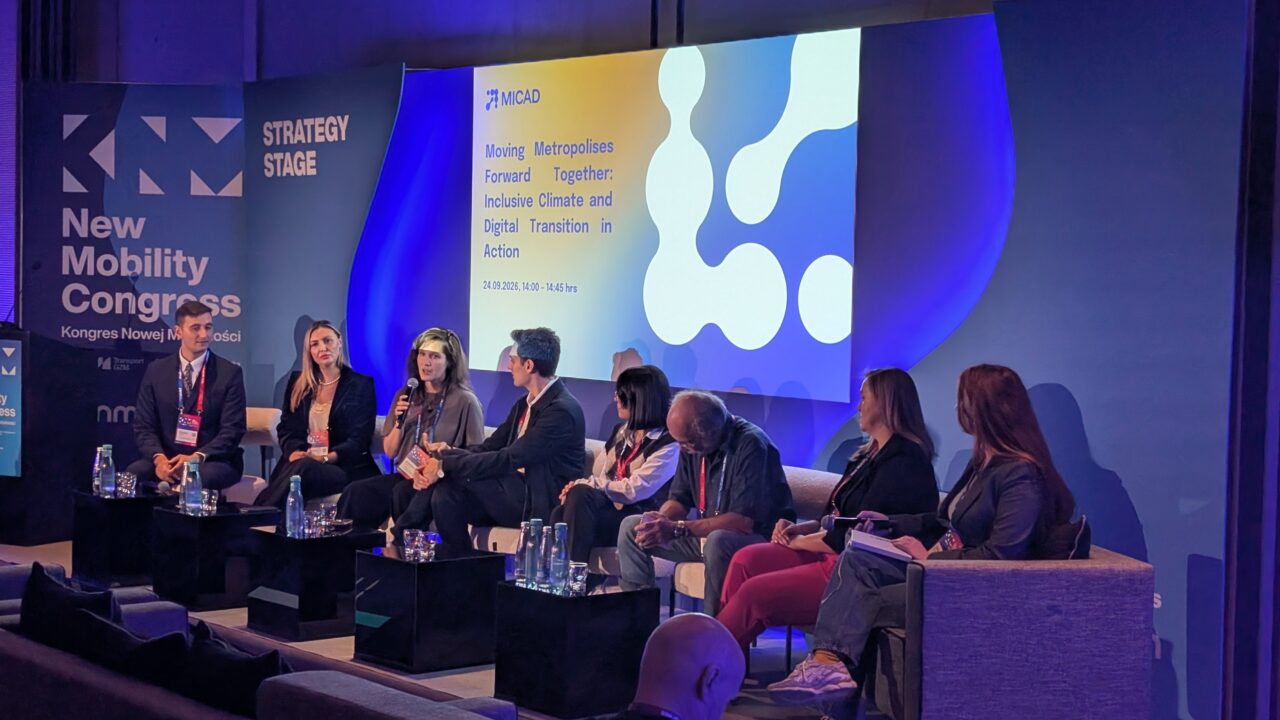
The panel offered a valuable opportunity to exchange experiences and reflect on a central principle: there is no single model of metropolitan transition that can be applied to every territory. Metropolitan areas differ in their institutional arrangements, governance capacities, stakeholder relationships and local priorities. These differences call for approaches that are adapted to each context while remaining grounded in a shared commitment to cooperation, inclusion and sustainable development.
Effective metropolitan governance is therefore not simply a matter of finding the right institutional structure. It is about building the right connections between institutions, policy levels, knowledge partners and communities, enabling them to work towards common goals. This is precisely where MICAD contributes: by supporting metropolitan areas in strengthening collaborative governance, developing practical approaches to the twin transition and connecting strategic ambitions with the capacities and partnerships needed to implement them.
Moving metropolises forward together means recognising that climate and digital transitions are not only technological or environmental challenges. They are also governance challenges, and addressing them requires cooperation that is sustained, inclusive and tailored to the realities of each territory.
“Effective cooperation also depends on clarifying responsibilities, involving stakeholders in policy design and ensuring that transitions improve people’s lives without reinforcing existing inequalities” Júlia Palmarola, Project Coordinator from Metropolis.
Moving metropolises forward together means recognising that climate and digital transitions are not only technological or environmental challenges, but also governance challenges that require sustained cooperation across institutions, territories and communities.
Be part of a transformative movement towards inclusive climate and digital solutions. Together, we can shape sustainable metropolitan futures.
