Dakar advances its Energy Transition through Training, Education and Solar Infrastructure
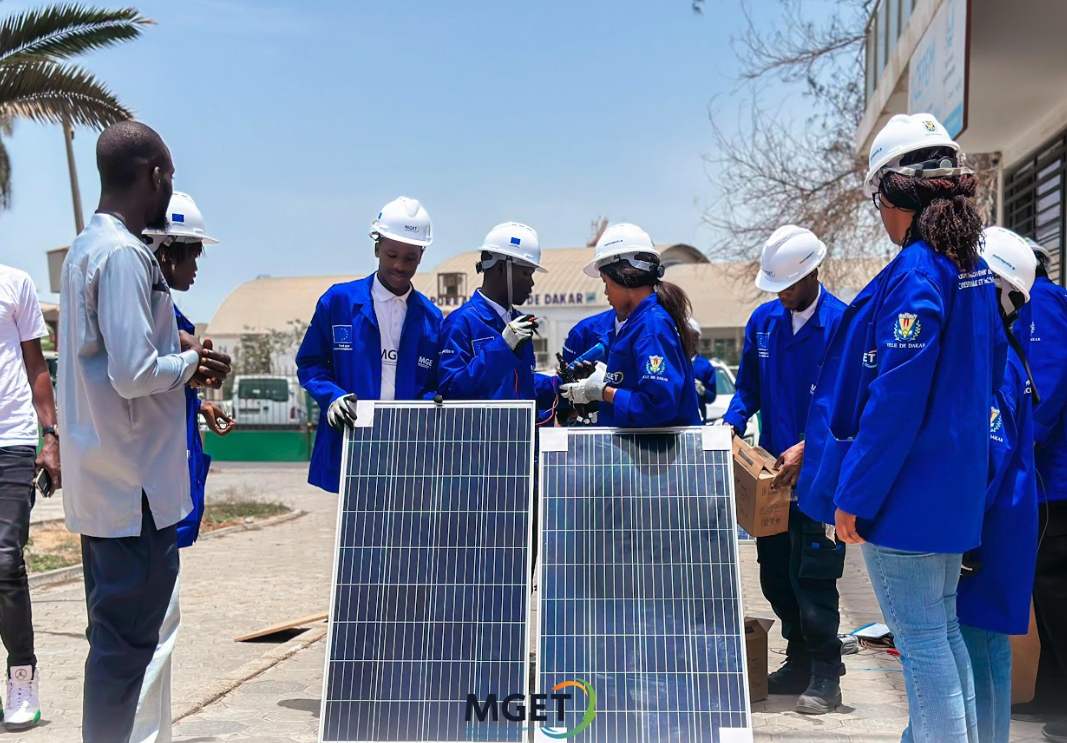

The City of Dakar is accelerating its transition toward a more sustainable and resilient energy model through the Metropolitan Governance of the Energy Transition (MGET) project.
Implemented in partnership with Metropolis and co-financed by the European Union, MGET combines technical capacity building, public awareness, and strategic solar investments to support climate action at metropolitan scale.
In a context of rapid urban growth and increasing energy demand, the project aims to strengthen local governance, reduce greenhouse gas emissions, and promote renewable energy solutions across Dakar’s 19 municipalities.
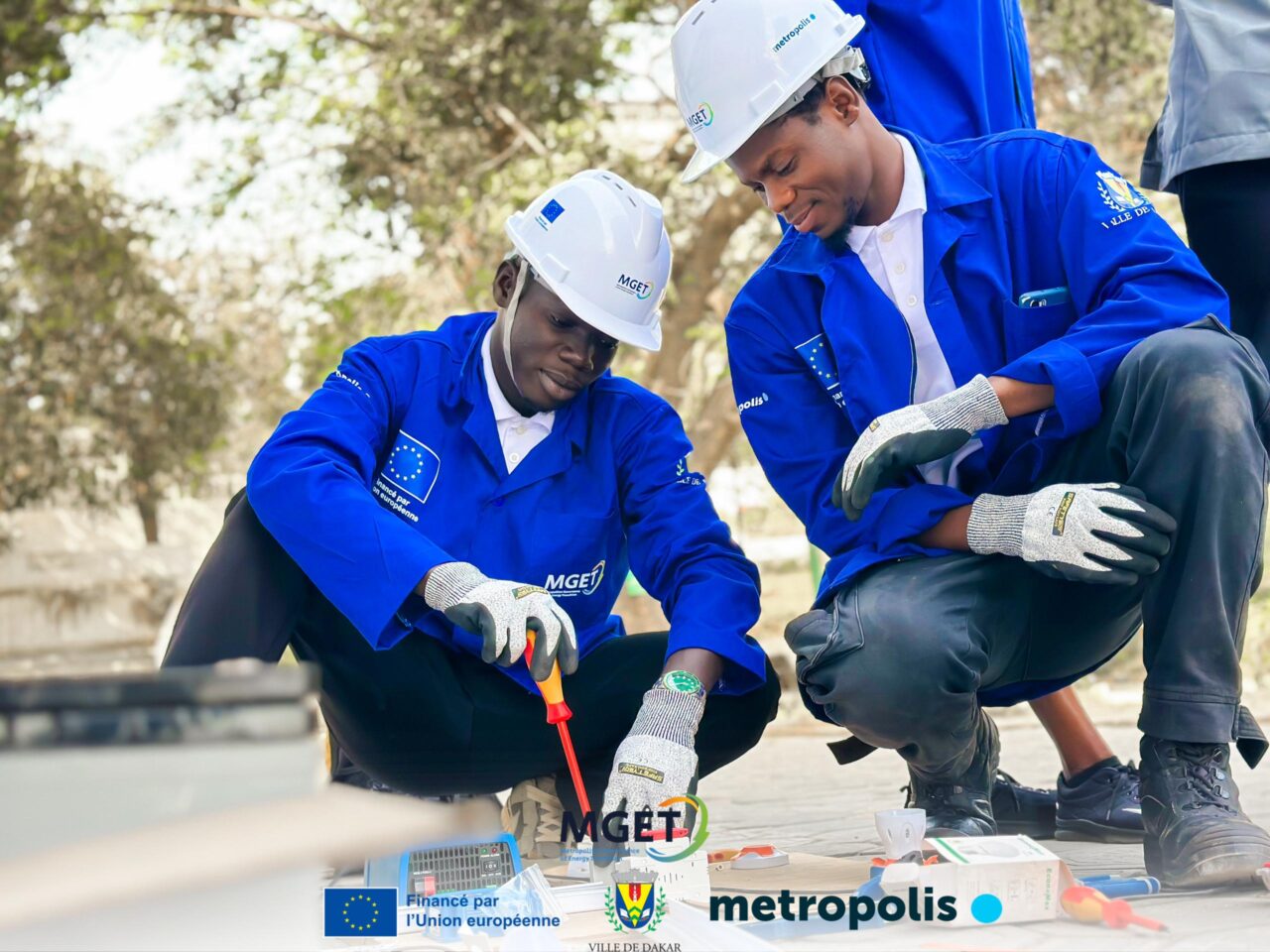
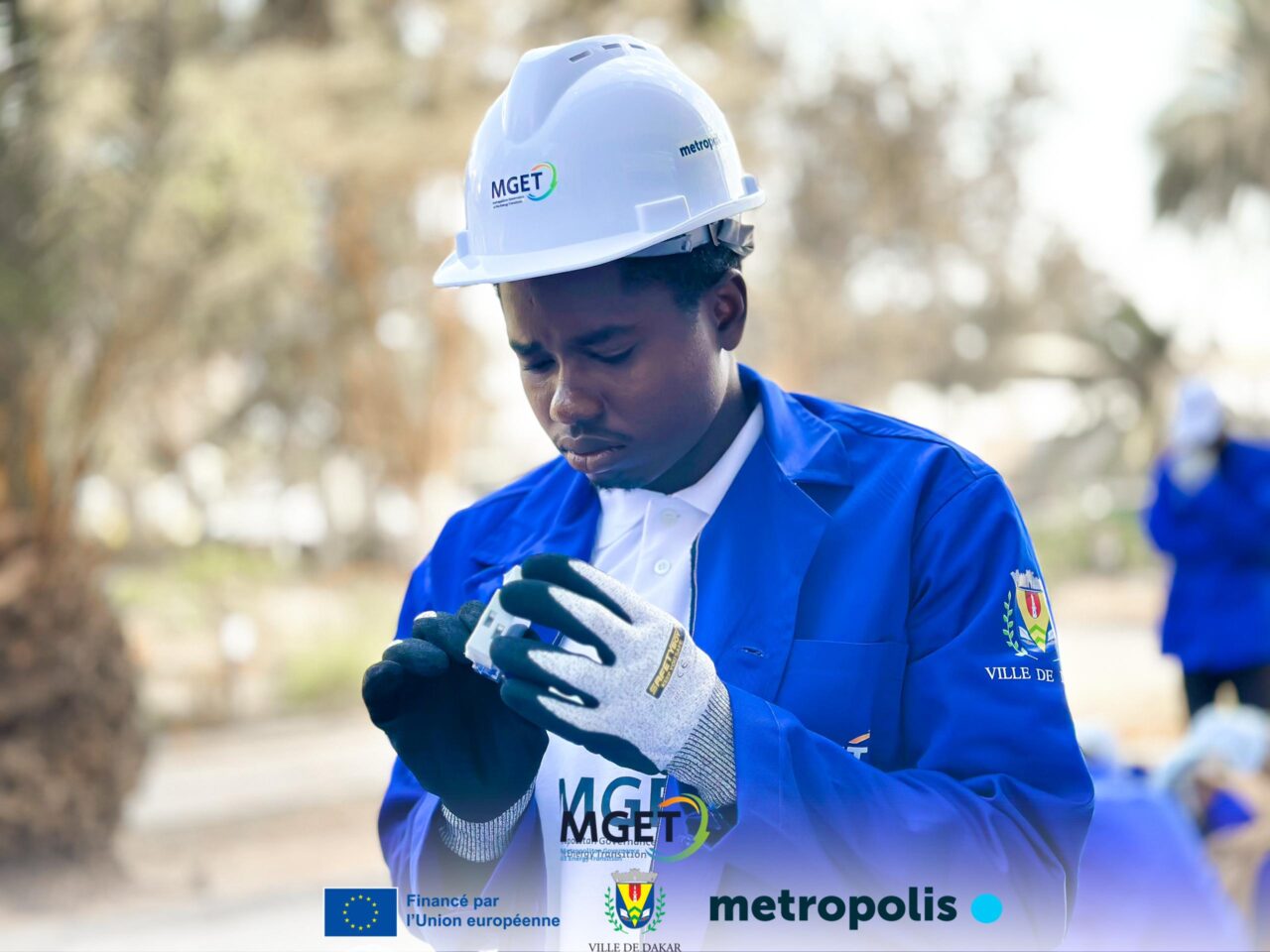
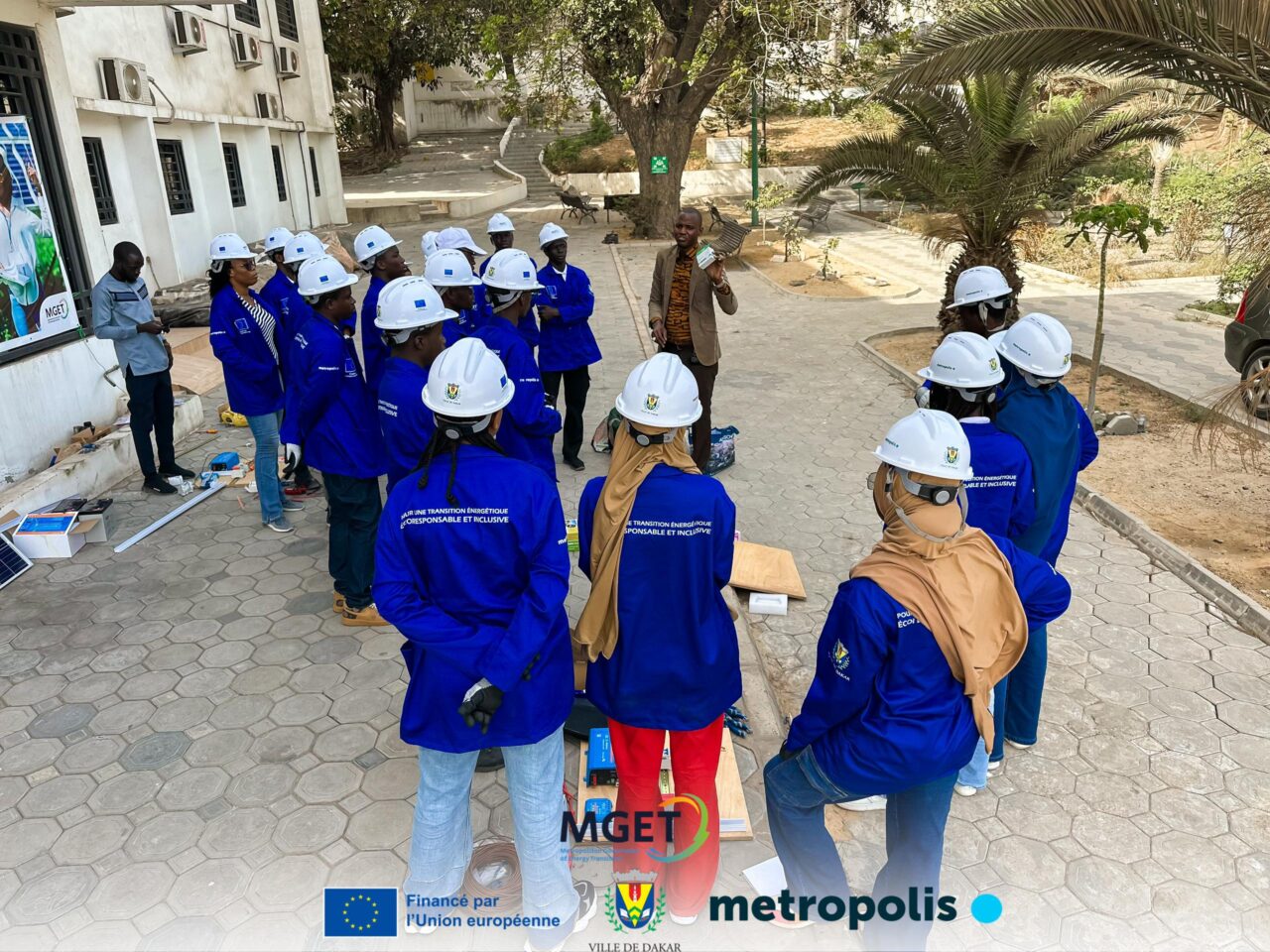
In 2025, three technical training cycles were delivered to 60 young energy professionals from across Dakar’s municipalities. These sessions focused on the installation, sizing, operation and maintenance of solar photovoltaic systems. Delivered through a competency-based approach combining theory and hands-on practice, the training prepared participants to actively contribute to municipal solarization projects. Participant satisfaction rates ranged between 90% and 100%, reflecting strong engagement and practical relevance. Recommendations for extended practical modules and advanced thematic training (solar pumping, energy efficiency, wind systems) confirm the growing technical appetite and local ownership of the energy transition agenda.
In parallel, four energy management workshops were organized across Dakar’s four districts, gathering 136 representatives from civil society and the private sector. These sessions promoted energy sobriety, efficiency measures and renewable energy integration, while facilitating dialogue between local stakeholders and national energy agencies. The workshops strengthened alignment with Dakar’s Climate and Energy Action Plan and reinforced local commitment to climate mitigation.
Recognizing that long-term transition requires behavioral change, MGET launched an ambitious school awareness campaign targeting primary and secondary students.
Between December and February 2026, 14 schools were visited, reaching hundreds of students through interactive sessions on energy efficiency, renewable energy and sustainable practices. A total of 400 educational quiz kits were distributed during this first phase.
The pedagogical tool – designed as interactive quiz cards tailored to different age groups– encourages playful learning while strengthening understanding of key energy concepts. In total, 1,000 primary-level kits and 500 secondary-level kits were produced using durable and environmentally responsible materials. Teachers and education authorities welcomed the initiative and expressed interest in scaling it citywide. Students demonstrated remarkable engagement, raising questions on solarization, recycling, and energy savings in daily life.
The campaign contributes not only to climate literacy but also to the emergence of a generation of “energy ambassadors” within families and communities.
A public procurement process was launched in October 2025 for the installation of solar photovoltaic systems across seven municipal buildings, including schools, community centers and administrative facilities. The project includes:
These installations are designed for self-consumption in parallel with the national grid and aim to significantly reduce electricity costs and CO₂ emissions while improving municipal energy autonomy. The combination of renewable integration, energy efficiency measures and digital monitoring reflects a systemic approach that links climate transition with digital innovation.
The European Union plays a central role as co-financer of the MGET project.
A comprehensive communication strategy ensures full compliance with EU visibility guidelines, including systematic display of the EU emblem and the mention “Co-financed by the European Union” across all physical and digital materials.
In March, MGET will launch a high-impact digital audiovisual campaign structured in 15 short episodes. The campaign partners with two of Senegal’s most influential content creators, whose combined Instagram reach exceeded 500 million views in the past year.
Disseminated across Instagram, TikTok and Facebook, the campaign targets broad urban audiences, particularly youth. EU visibility is fully integrated into the campaign through on-screen branding, logo placement in every publication, and explicit acknowledgment of EU co-financing. This approach ensures institutional recognition while reaching audiences beyond traditional policy circles.
Since the project’s launch, the Delegation of the European Union has actively participated in official events, reinforcing institutional legitimacy and highlighting international cooperation in support of Dakar’s climate ambitions. Through training, education, infrastructure investment and strategic communication, MGET demonstrates how metropolitan governance can drive climate transition at local level. By combining technical expertise, community engagement and international partnership, Dakar is positioning itself as a regional reference in urban energy transformation.
Be part of a transformative movement towards inclusive climate and digital solutions. Together, we can shape sustainable metropolitan futures.
