Learning from Metropolitan Areas: lessons from GRENOBLE-ALPES MÉTROPOLE

Author: Dr Maryna Gorobei
Smart City Project Manager, Urban Technology Alliance (UTA), MICAD partner
Across Europe and beyond, cities are increasingly confronted with the challenge of implementing the twin transition – digital and climate transformation – in a coherent and operational manner. While policy frameworks at European and national levels provide strategic direction, translating these ambitions into practical implementation at the metropolitan scale remains a complex task.
Urban systems extend far beyond administrative boundaries. Infrastructure networks, mobility systems, energy supply and climate risks operate at territorial scales that encompass entire metropolitan regions. As a result, the effectiveness of climate and digital strategies often depends on the ability to coordinate actions across multiple municipalities and governance levels.
Urban challenges such as air pollution, energy consumption, mobility flows and climate adaptation rarely follow administrative boundaries. These issues affect entire metropolitan regions rather than individual municipalities.
For this reason, metropolitan governance structures increasingly play an important role in coordinating climate and digital initiatives across multiple cities and territories. By aligning planning frameworks, infrastructure investments and policy priorities, metropolitan authorities can ensure that digital innovation directly supports sustainability objectives.
This coordination also allows cities to move beyond isolated pilot projects and develop more coherent urban transformation strategies. Several international experiences illustrate how cities move from experimentation to systemic transformation.
With this article, we officially launch the new “Learning from Others” section, curated by MICAD partners. This space will showcase practical examples from cities across Europe and beyond, that have proven particularly relevant for metropolitan digital and climate transitions with the aim of sharing experiences, solutions, and innovative approaches.
This first contribution draws the first concrete experience from a European metropolitan area, Grenoble-Alpes Métropole, and illustrates how the city is translating strategic ambitions for digital and climate transitions into concrete operational solutions, offering useful and replicable insights for other contexts.
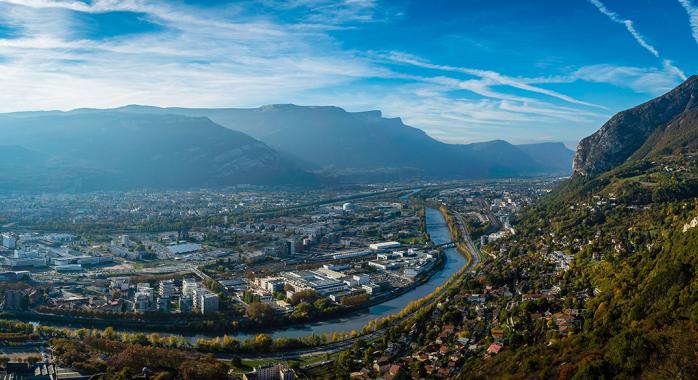
Grenoble-Alpes Métropole https://www.grenoblealpesmetropole.fr/ is one of the most recognised European metropolitan territories for innovation-driven urban transformation. Located in south-eastern France at the foothills of the French Alps, the metropolitan authority brings together 49 municipalities and approximately 815000 inhabitants, forming a dense urban basin characterised by strong interconnections in mobility, research, industry and public services.
The metropolitan area combines a compact urban core with a polycentric structure and hosts a highly developed ecosystem of research institutions, technology companies and universities. This concentration of innovation capacity has enabled Grenoble to position itself as a leading European territory for experimentation in sustainable urban development.
Grenoble-Alpes Métropole is also an active member of the Urban Technology Alliance, a global network of cities and technology partners working together to develop and deploy innovative solutions for sustainable urban development.
The city has received several international recognitions reflecting its strong commitment to innovation and climate action. Grenoble was awarded the title of European Green Capital in 2022, recognising its leadership in environmental policy and sustainable urban planning. More recently, the metropolitan area was selected as European Capital of Innovation 2026, highlighting its ability to combine technological innovation, experimentation and citizen-driven urban transformation.
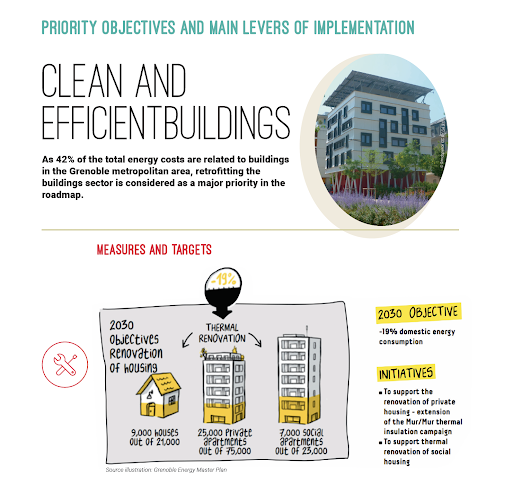
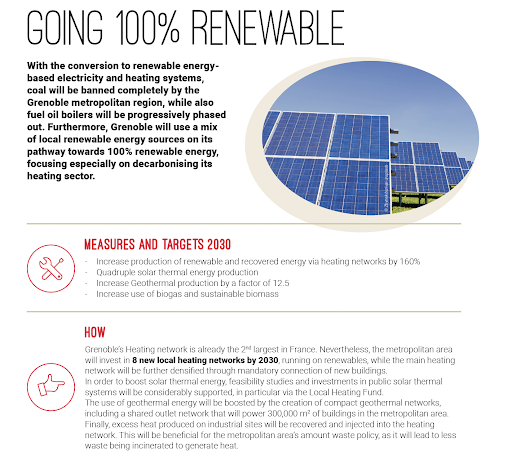
The climate and urban development strategy of Grenoble-Alpes Métropole is based on several interconnected priorities addressing both mitigation and adaptation challenges. Rather than focusing on isolated initiatives, the metropolitan authority has adopted a systemic approach integrating energy transition, urban innovation, climate adaptation and citizen participation.One of the central pillars of the strategy is the transition towards a fully renewable energy system, supported by large-scale investments in district heating networks, geothermal energy, solar energy and sustainable biomass. At the same time, the metropolitan authority has identified the building sector as a key lever for decarbonisation, launching ambitious programmes aimed at improving energy efficiency and accelerating large-scale building renovation.
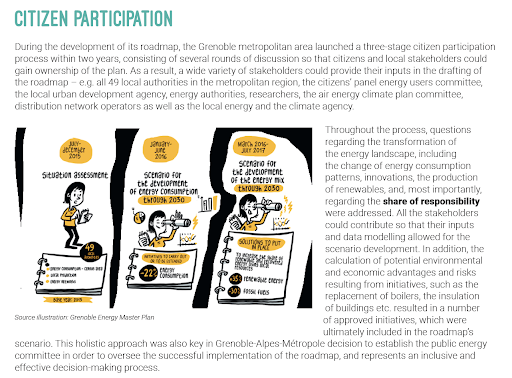
Another important dimension of Grenoble’s strategy is the strong emphasis on citizen participation. The metropolitan authority has implemented participatory processes allowing residents, researchers, local institutions and energy agencies to contribute to the development of climate and energy roadmaps.
Together, these elements form a comprehensive framework designed to guide Grenoble’s transition towards a low-carbon and climate-resilient metropolitan territory.
While strategic planning provides the overall direction, Grenoble-Alpes Métropole is particularly known for its ability to translate policy ambitions into real-world innovation pilots and experimental projects. These initiatives allow the metropolitan authority to test new technologies, evaluate their impact and gradually integrate successful solutions into urban policies.
One of the most pressing challenges currently addressed by the metropolitan area is urban overheating, a phenomenon increasingly affecting many European cities.

Urban Heat Islands (UHI) represent a growing challenge for cities worldwide. The phenomenon occurs when urban areas experience significantly higher temperatures than surrounding rural areas due to dense construction, limited vegetation and heat-absorbing materials such as asphalt and concrete.
In densely built metropolitan areas, this effect can significantly increase thermal stress for residents and contribute to public health risks. Studies show that extreme heat events are already responsible for thousands of deaths across Europe every year, and rising urban temperatures are expected to intensify these impacts in the coming decades.
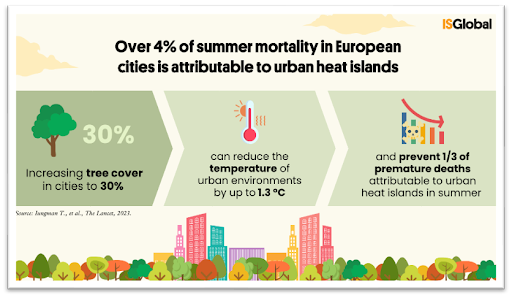
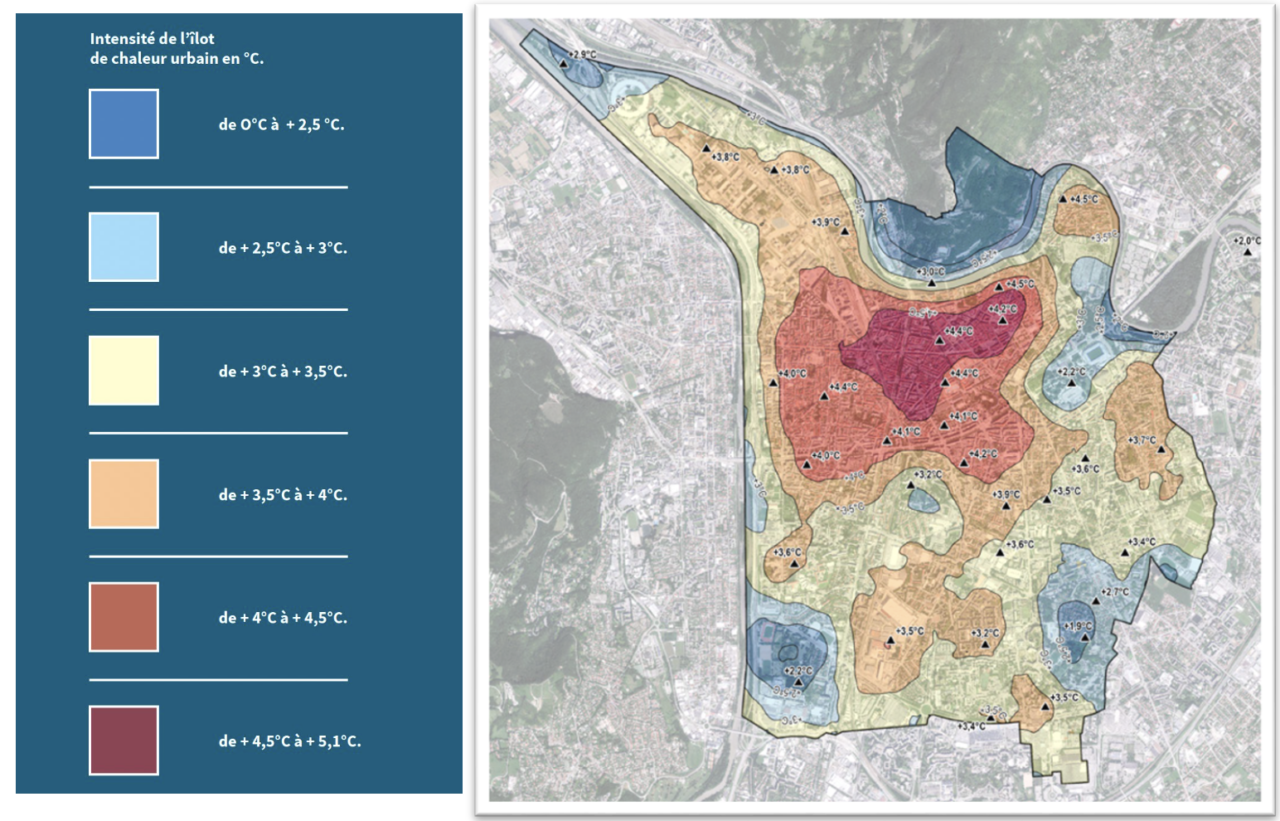
For Grenoble, the challenge is particularly acute due to its geographical position in an enclosed Alpine valley, where limited air circulation can amplify heat accumulation during heatwaves.
To better understand and address this phenomenon, Grenoble-Alpes Métropole has launched a series of research and innovation initiatives aimed at analysing and mitigating Urban Heat Island effects. One of the most advanced examples is the development of the Climagre decision-support tool, designed to help urban planners in evaluating the climate impact of development projects.
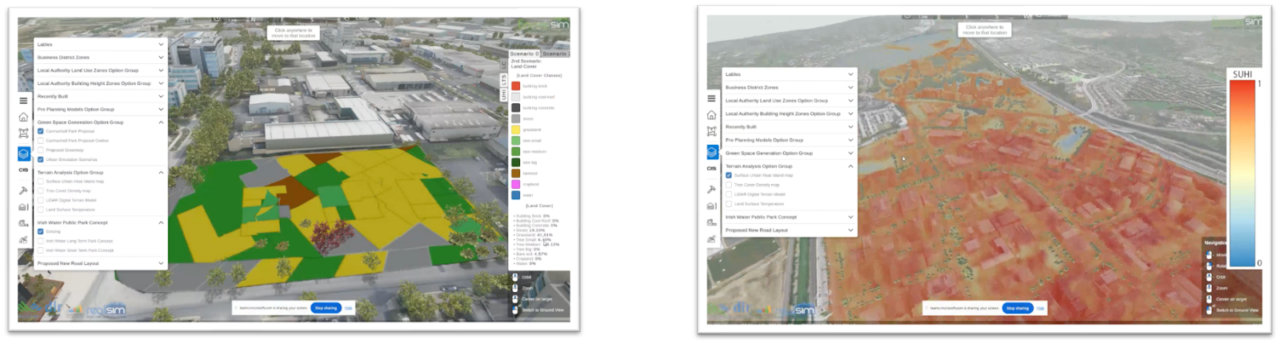
The platform integrates multiple environmental datasets – including land cover, vegetation levels, impervious surfaces and building density – and applies advanced modelling techniques to simulate how urban design choices influence temperature dynamics and thermal comfort.
By comparing different planning scenarios, decision-makers can assess the potential impact of interventions such as increasing urban greenery, modifying surface materials or redesigning public spaces. This approach enables the city to move towards evidence-based urban planning, where climate impacts are evaluated before construction takes place.
The development of the CLIMAGRE platform was carried out by an ecosystem of technology partners – members of the Urban Technology Alliance: Kentyou, Latitudo 40 and RealSim, contributing expertise in digital twins, geospatial analytics and urban simulation.
The experience of Grenoble-Alpes Métropole highlights the importance of metropolitan coordination and evidence-based planning in climate transition. Climate risks such as urban overheating do not stop at municipal boundaries, and effective responses therefore require governance structures capable of coordinating action across an entire metropolitan territory.
Grenoble demonstrates how climate policy can move from strategic ambition to operational implementation through the use of data-driven planning tools and innovation pilots. By combining advanced modelling, digital twin technologies and real-world experimentation, the city is able to evaluate the impact of urban development projects before implementation and integrate climate considerations directly into planning decisions.
Another key lesson lies in the integration of innovation ecosystems and citizen participation into climate governance. Collaboration with research institutions, technology partners and residents enables cities to develop solutions that are both scientifically robust and socially supported.
For other cities, the Grenoble case illustrates that addressing complex climate challenges requires more than technological solutions alone. It requires metropolitan-scale governance, cross-sector collaboration and decision-support tools capable of translating climate data into practical urban planning decisions.
Be part of a transformative movement towards inclusive climate and digital solutions. Together, we can shape sustainable metropolitan futures.
