Barcelona Metropolitan Area: leading the climate transition through coordinated action
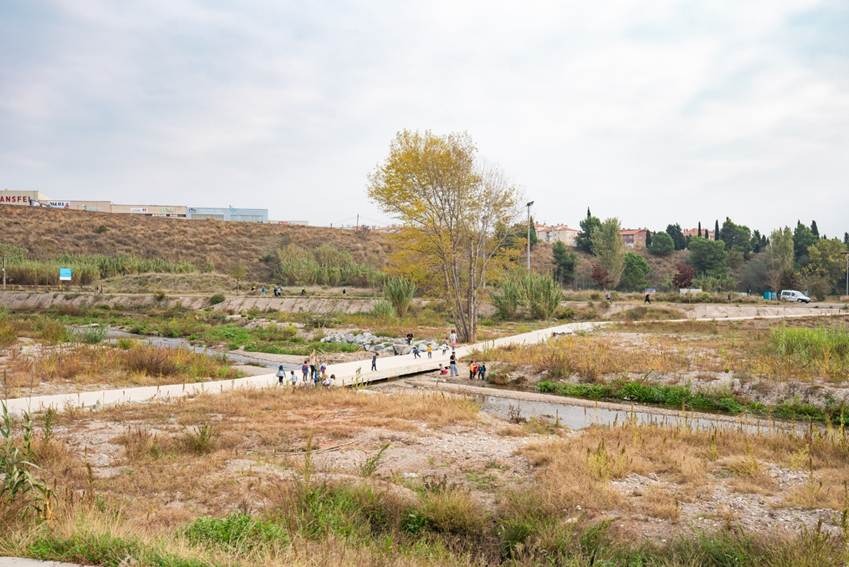

Climate action is one of the Barcelona Metropolitan Area’s (AMB) core priorities, and for good reason.
The metropolitan territory is already experiencing the impacts of climate change in visible and tangible ways. Temperatures are rising, heat episodes are becoming more intense, and torrid summer nights are now a regular occurrence. Sea-level rise is eroding the coastline, stripping away around 4,000 tons of sand every year and shrinking some of the region’s most cherished beaches. And in recent years, severe droughts have put additional strain on water resources, affecting many non-essential uses.
Faced with these challenges, AMB has placed climate action at the heart of all its work. Across its 36 municipalities, home to 3.4 million people, the institution has responsibilities in urban planning, mobility, environment, public space, housing, and socio-economic development. In each of these areas, climate considerations guide how we plan, invest, and transform the territory.
To coordinate this effort, two strategic documents play a central role. The 2030 Climate and Energy Plan, published in 2018, sets out three major strategies: carbon reduction, energy transition, and climate adaptation, supported by 92 concrete actions for a fair and effective green transition. Complementing this, the Declaration of Climate Emergency, approved in 2021, outlines AMB’s commitments in sustainability, mobility, energy, climate justice, green jobs, circular economy, food systems, and public health.
These frameworks translate into action across multiple fronts:
The PMEC 2030 (Programme of Actions in Energy and Climate) aims to reduce energy consumption, expand renewable generation, and create a more resilient energy model. Among its most ambitious goals is supporting the creation of 300 energy communities, empowering residents and local actors to produce and share clean energy.
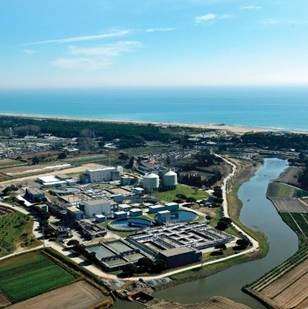
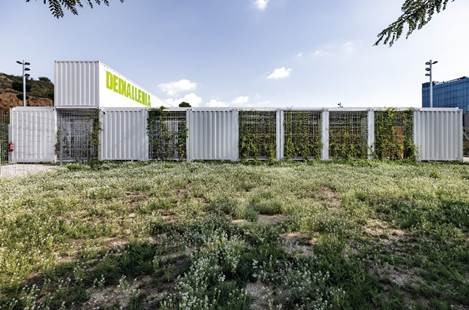
Water treatment plant in Gavà-Viladecans, and waste collection point in Sant Just Desvern. Images: Àrea Metropolitana de Barcelona.
The Comprehensive Water Cycle Strategic Plan (PECIA) promotes more efficient use of water and the incorporation of alternative resources such as reclaimed or regenerated water. Covering the entire cycle, from supply to treatment to return to the environment, it strengthens resilience against drought and safeguards ecosystems.
While Barcelona already stands out as a metropolis of short distances and comparatively low car use, the Metropolitan Urban Mobility Plan sets bold targets to go further. Since 2020, most of Barcelona and many surrounding municipalities have been included in a Low Emission Zone, which has significantly reduced pollutant levels and encouraged cleaner mobility choices.

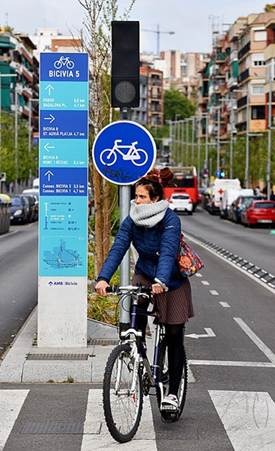
Electric charging station, and metropolitan cycleway network ‘Bicivia’. Images: Àrea Metropolitana de Barcelona.
With one of the highest population densities in Europe, the metropolis already protects much of its natural land. The new Metropolitan Urban Master Plan, currently under development, reinforces this by prioritizing dense, mixed-use neighbourhoods, high-quality public spaces, and sustainable mobility. Housing policies focus on rehabilitation where possible and new construction using low-impact, sustainable materials where needed. And public space interventions ensure that natural areas are accessible and enjoyable for all.
AMB is reshaping waste management altogether, treating waste as a resource rather than a burden. Initiatives support waste prevention, improved sorting, and decarbonisation, forming the backbone of a more circular metropolitan economy.

Metropolitan Network of Climate Shelters for Summer 2025. Image: Àrea Metropolitana de Barcelona.
Many of these strategies are already visible throughout the territory. The Metropolitan Network of Climate Shelters is expanding rapidly, with 244 active cooling spaces available to residents during the summer of 2025. In addition, several European-funded projects reinforce this work:
· EUI Time2Adapt – expanding the climate shelter network.
· Interreg Euro-MED Heatsafe – developing environmental and social adaptation frameworks for extreme heat.
· EUI TopSec – transforming rooftops with green, circular, low-maintenance solutions that enhance biodiversity and improve insulation.
The challenges facing Barcelona’s metropolitan region are real and urgent, but so is the commitment to address them. Through coordinated action in mobility, water, urban planning, energy, housing, and waste management, AMB is laying the foundation for a more sustainable, resilient, and fair metropolis. Climate adaptation is not a distant goal: it is the work happening now, every day, across the territory.
Be part of a transformative movement towards inclusive climate and digital solutions. Together, we can shape sustainable metropolitan futures.
