Learning from Practices: Advancing Sustainable Mobility


Authors: Anastasia Ponomareva, Senior Researcher and Living Lab Practitioner, and Laura Minisini, Scientific Collaborator, HES-SO, University of Applied Sciences and Arts of Western Switzerland (HES-SO), MICAD partner
The transition towards sustainable mobility is becoming a strategic priority for metropolitan authorities across Europe.
Growing urbanisation, climate change, air pollution, traffic congestion and increasing demands for accessibility require cities to rethink how people move within metropolitan areas. At the same time, rapid advances in digital technologies, combined with new approaches to urban planning and public space design, are creating opportunities to improve transport systems, enhance the user experience and encourage more sustainable travel behaviours.
Across Europe, metropolitan authorities are implementing a wide range of innovative mobility solutions that combine active mobility infrastructure, public space transformation, digital technologies, data-driven transport planning and behavioural approaches. These initiatives go beyond improving transport efficiency; they contribute to creating more liveable, accessible and resilient cities by promoting walking, cycling, multimodal transport, inclusive accessibility and evidence-based mobility planning.
The good practices presented in this document illustrate different approaches to sustainable urban mobility. Although each initiative responds to specific local challenges, they all demonstrate how innovation can support metropolitan authorities in improving mobility systems while reducing environmental impacts and enhancing quality of life. The examples include street and neighbourhood redesign, pedestrianisation, cycling infrastructure, digital mobility services, behavioural change initiatives, transport planning and accessible navigation solutions that foster more inclusive mobility systems.
Together, these case studies demonstrate that sustainable mobility is not achieved through a single intervention but through complementary measures combining high-quality public spaces, physical infrastructure, digital innovation, citizen-centred services and data-driven decision-making. They provide transferable lessons for metropolitan authorities seeking practical approaches to accelerate the transition towards safer, healthier, more inclusive and environmentally sustainable mobility systems.
What if streets were designed primarily for people rather than cars? Barcelona and Ljubljana offer two examples of how urban transformation can improve public space while encouraging more sustainable mobility.
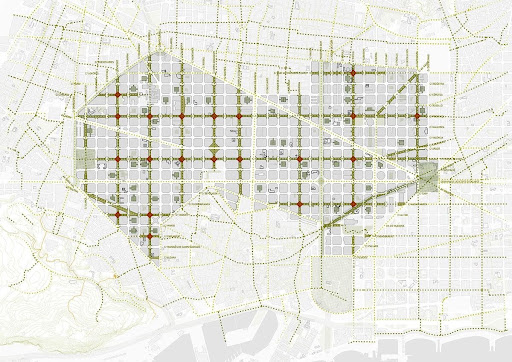
In BARCELONA, Spain, the Superblocks (Superilles) model reorganises traffic within groups of city blocks, redirecting through traffic to perimeter roads and reclaiming internal streets for pedestrians, cyclists, greenery and community activities. The approach has progressively expanded through the development of Green Axes and new public squares, creating a network of more people-centred spaces across the city.
By reducing the dominance of motorised traffic, the initiative aims to improve neighbourhood liveability, reduce noise and air pollution, and create more opportunities for social interaction. Pilot projects and public participation have also played an important role in refining interventions and supporting long-term acceptance of the initiative. The Superblocks model can be adapted to other cities with regular street networks seeking to reduce car dependency and promote active mobility.
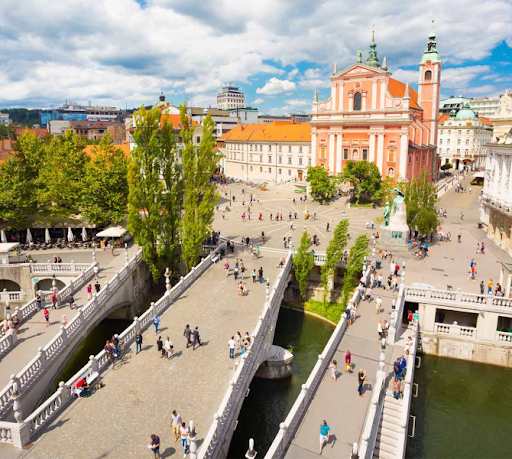
LJUBLJANA, Slovenia, has pursued a similar transformation through the progressive pedestrianisation of its historic city centre, as part of its Vision 2025. The initiative aimed to tackle traffic congestion and air pollution while reclaiming public space from private vehicles, making the city centre more attractive to residents and visitors. Streets and squares have been redesigned to prioritise pedestrians, complemented by cycling infrastructure and public transport connections. Today, the pedestrian-priority area covers more than 10 hectares, creating a continuous network of car-free public spaces (high public acceptance: with 88–95% of residents supporting the pedestrianisation programme)
Importantly, pedestrianisation has been accompanied by measures to ensure that the city centre remains accessible to everyone. The Kavalir service, a free electric shuttle operating within the pedestrian zone, helps older adults and people with reduced mobility navigate the area comfortably (More than 1.2 million passengers transported by the Kavalir electric shuttle service by 2017). Moreover, Cyclists are allowed to circulate within the pedestrian zone under shared-space principles, while the city also introduced a public bike-sharing system integrated with public transport through the URBANA mobility card.
This measure guarantees Ljubljana to have more attractive public spaces supporting cultural, commercial and social activities too.
Despite their different approaches, both cities demonstrate that reclaiming public space can simultaneously support active mobility, environmental quality, social life and economic attractiveness. Their experiences highlight the importance of combining infrastructure changes with accessibility measures, citizen engagement and a long-term urban vision.
The key lesson: transforming streets into attractive, accessible public spaces can encourage walking and cycling while improving urban liveability. Pilot interventions, continuous communication and inclusive design can help metropolitan authorities implement ambitious changes and build public acceptance and support.
Digital technologies and behavioural approaches are creating new opportunities to make mobility systems more responsive to people’s needs. From encouraging sustainable travel choices to improving public transport operations and enabling independent navigation, Konya, Paris, Antalya and Tallinn illustrate different ways to integrate innovation into everyday mobility.
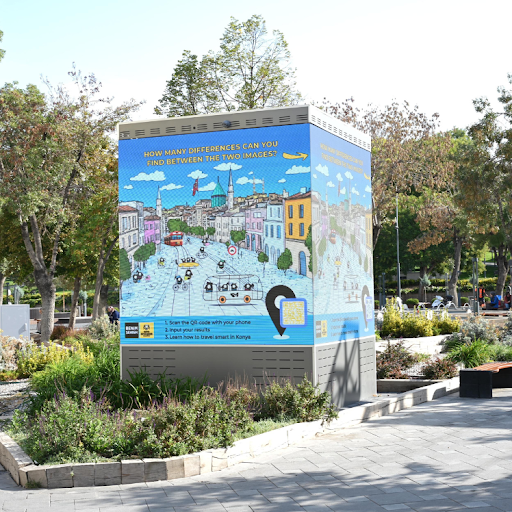
In KONYA, Türkiye, the municipality introduced Smart Nudges Mobility, developed by Nudgd, a digital solution designed to encourage citizens to adopt more sustainable and multimodal travel behaviours. Using principles from behavioural science, the platform delivers personalised digital nudge through municipal applications, websites, public digital displays and other communication channels. Gamification techniques further encourage engagement and together with an intuitive and personalised interface, influences travel choices at the moment decisions are made.
The pilot was implemented during European Mobility Week 2024 as part of the EIT Urban Mobility RAPTOR programme. It reached 9,698 users. According to the reported results, 93% of users stated that they had changed or intended to change their travel behaviour, while 25% reported actively changing their travel habits and 30% adopted more multimodal mobility habits, reducing reliance on private cars. The initiative illustrates how existing digital channels can be used to promote alternatives to private car use without relying exclusively on major infrastructure investments.
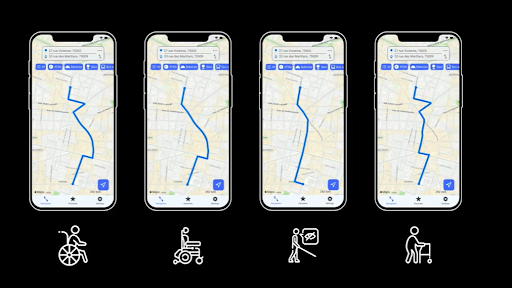
PARIS, France, addresses a different but equally important challenge: making journeys accessible from beginning to end. Through StreetNav, implemented as part of the Enhanced Accessibility Neighbourhoods (Quartiers d’accessibilité augmentée) which aims to improve independent mobility throughout the city, the system provides digital navigation across public spaces, transport hubs and municipal buildings. The platform combines outdoor and indoor navigation with accessibility and up-to-date information to guide users from their departure point to their final destination according to their mobility profile. Routes can be adapted to users’ accessibility needs, including those of wheelchair users, people with reduced mobility and people with visual impairments. The system also provides indoor navigation and accessibility information, helping users move through facilities and reach public services more independently.
While Paris focuses on the user experience, ANTALYA, Türkiye, demonstrates how digital tools can improve the operational efficiency of public transport. The municipality implemented Cermoni, an AI-supported decision-making system that analyses passenger demand and operational data to optimise timetables, vehicle allocation and driver assignments. The solution enables transport planners to assess different scenarios and respond to seasonal fluctuations and unexpected changes in demand. According to the Antalya pilot, the required fleet was reduced from 96 to 91 vehicles while maintaining service levels. More efficient vehicle deployment also contributed to lower operational costs, mileage and associated carbon emissions.
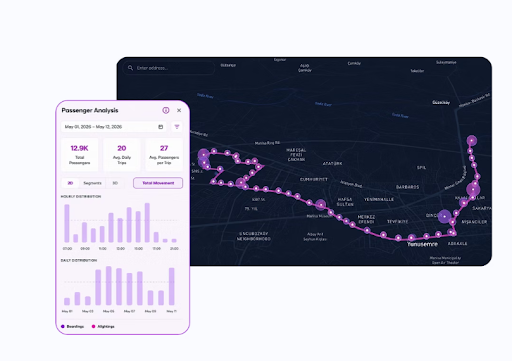
TALLIN, Estonia, meanwhile, has explored how digital engagement can encourage active mobility. Through the BICIFICATION project, supported by EIT Urban Mobility, the city participated in an initiative using a gamified mobile application to reward cycling trips through points, challenges and incentives. Anonymised mobility data collected through the platform can also help municipalities understand cycling patterns, identify infrastructure and investments needed, support evidence-based planning and evaluate the effectiveness of cycling policies.
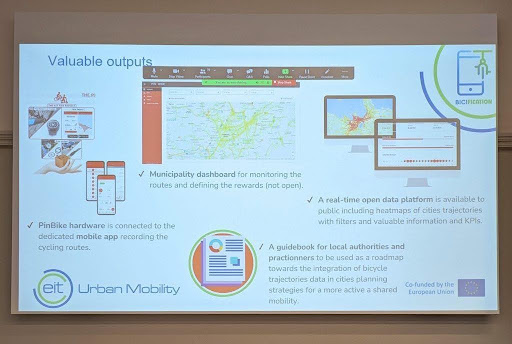
Together, these four examples show that digital innovation can contribute to sustainable mobility in different ways: influencing travel behaviour, removing accessibility barriers, optimising public transport resources and informing infrastructure planning.
Technology is most valuable when it responds to clearly identified needs and complements broader mobility policies.
The key lesson: smart mobility is not simply about deploying digital tools. It requires a people-centred approach that combines reliable data, accessible services, behavioural insights and effective public transport planning. Metropolitan authorities can use these solutions to make mobility more efficient while responding to the diverse needs of citizens.
Sustainable mobility also depends on how effectively cities connect neighbourhoods, destinations and surrounding territories. Burgas and Greater Geneva illustrate the importance of integrating transport options and planning mobility beyond individual streets or administrative boundaries.
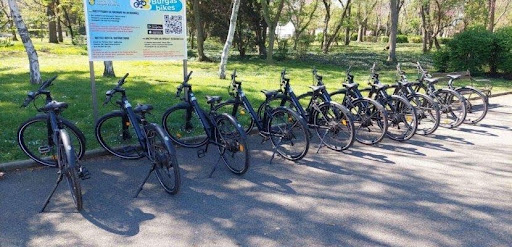
In BURGAS, Bulgaria, the municipality has sought to make cycling a more attractive option for everyday journeys to face increasing private car use, congestion and limited cycling infrastructure. It has been possible by combining an expanded cycling network with the Velo Burgas bike-sharing system: dedicated cycling routes connect residential neighbourhoods with schools, universities, business districts and the city centre, while bicycle-sharing stations provide an alternative to private car use.
The approach also seeks to improve connections with public transport, allowing cycling to complement bus journeys and address first- and last-mile needs. Awareness campaigns and cycling events support these infrastructure investments by encouraging residents to consider cycling for both daily mobility and leisure.
Burgas demonstrates that promoting active mobility requires more than building individual cycling lanes. A connected network, accessible bicycles and links to other transport modes can make cycling a practical option for a wider range of journeys.
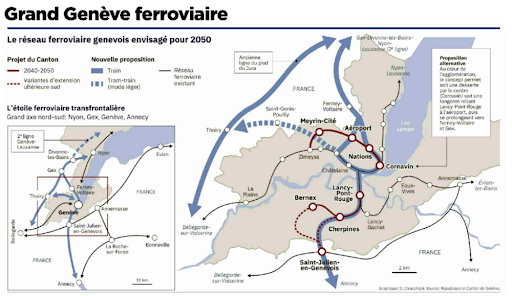
At a metropolitan scale, GREATER GENEVA, spanning Swiss and French territories, faces a different challenge: managing substantial cross-border commuter flows travelling daily between residential areas in France and employment centres in Geneva, while reducing reliance on private cars to ease significant pressure on the main road corridors entering the metropolitan core. Its mobility strategy combines the Léman Express regional rail network with cross-border bus services, multimodal hubs and Park & Ride facilities. These connections allow commuters to access public transport from surrounding territories and transfer between regional and urban transport networks before reaching the congested metropolitan core without relying on a private car for the entire trip.
Mobility hubs such as Lancy-Bachet bring together regional trains, trams, buses, cycling infrastructure and shared mobility services. The approach treats journeys as integrated door-to-door connections rather than isolated transport segments. It also requires cooperation between authorities, municipalities and transport operators on both sides of the border.
The comparison between Burgas and Greater Geneva highlights two complementary dimensions of connectivity.
At the city level, cycling networks and bike-sharing systems help link people with everyday destinations. Across a wider metropolitan region, integrated public transport and coordinated planning connect residential areas with employment centres, including across national borders.
The key lesson: sustainable mobility depends on the continuity of the entire journey. Connecting different transport modes, coordinating services and planning around real travel patterns can provide attractive alternatives to private cars, whether within a city or across a complex metropolitan territory.
The eight examples show that there is no single solution to the mobility challenges facing European metropolitan areas. Effective approaches combine different interventions according to local needs, territorial characteristics and the people they serve.
Three common principles emerge.
First, public space is a strategic resource: reclaiming streets for pedestrians, cyclists and community activities can improve liveability while supporting the shift towards active mobility.
Second, innovation must serve people: digital tools, data-driven planning and behavioural approaches can improve transport efficiency, encourage sustainable choices and make journeys more accessible, provided that they respond to users’ needs.
Third, connectivity requires an integrated perspective: cycling infrastructure, public transport, mobility hubs and cross-border services are most effective when they operate as parts of a wider network, enabling people to complete their journeys seamlessly.
For metropolitan authorities, the challenge is therefore not simply to introduce new technologies or transport infrastructure, but to combine these measures within a coherent vision of sustainable, inclusive and accessible mobility. By learning from one another and adapting successful approaches to their own contexts, cities and metropolitan areas can accelerate the transition towards transport systems that benefit both people and the environment.
Be part of a transformative movement towards inclusive climate and digital solutions. Together, we can shape sustainable metropolitan futures.
