Learning from Others – focus Europe: lessons from HELSINKI

Author: Dr Maryna Gorobei
Smart City Project Manager, Urban Technology Alliance (UTA), MICAD partner
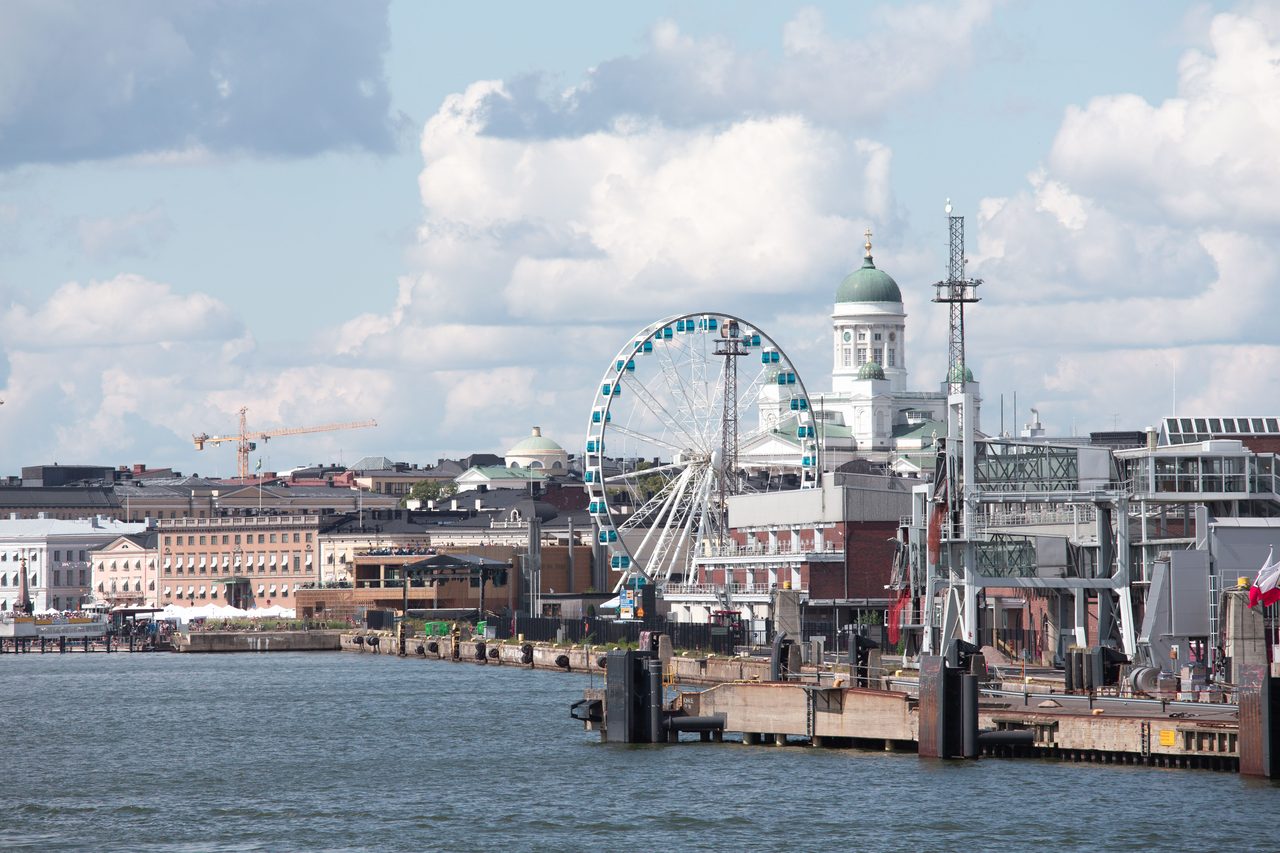
Helsinki, the capital of Finland is widely recognised as one of Europe’s most advanced cities in digital governance and data-driven urban development. With a population of around 650 000 residents and a metropolitan region exceeding 1.5 million inhabitants, the city has pursued a long-term strategy focused on digitalisation, climate neutrality and open innovation.
A key strength of Helsinki lies in its strong integration of digital infrastructure, open data policies and climate policy frameworks. The city has positioned itself as a pioneer in data-driven urban governance, where digital technologies support evidence-based decision-making across sectors such as mobility, energy systems, land-use planning and environmental management.
These priorities are reflected in Helsinki’s strategic objectives, including its commitment to become carbon-neutral by 2030 and to integrate digital tools into urban planning processes. To support these goals, the city has invested significantly in digital platforms that enable planners and policymakers to analyse urban systems and evaluate the potential impacts of policy decisions before they are implemented.
A particularly notable example of Helsinki’s approach is the development of a digital twin of the city, which serves as a decision-support tool for climate and urban planning.
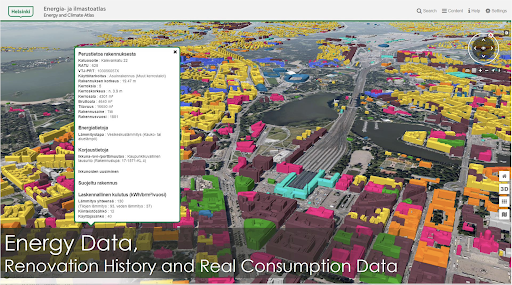
The system is built around a detailed 3D city model, which integrates spatial information about buildings, infrastructure and the urban environment. Within this digital environment, the city has developed the Energy and Climate Atlas, a platform that combines multiple datasets, including building energy consumption, renovation history and real energy use across different districts.
By linking these datasets to the digital twin, Helsinki can analyse the energy performance of buildings and neighbourhoods, identify areas with high energy demand and evaluate opportunities for energy efficiency improvements.
One of the key advantages of this system is the ability to simulate different development scenarios before implementing physical interventions. Urban planners can test how building renovations, district heating strategies or urban development projects may affect energy consumption, emissions and urban microclimates.
This approach allows the city to reduce uncertainty in planning decisions and prioritise investments that deliver the greatest climate benefits. In this sense, digital twin technology functions not only as a visualisation tool, but as a strategic instrument supporting long-term climate and urban policy.
AI FOR URBAN MOBILITY AND TRAFFIC MANAGEMENT
In addition to digital twins for urban planning, Helsinki is also actively exploring the use of artificial intelligence for urban mobility management. One notable example is the city’s participation in the AI4Cities initiative, an EU-funded pre-commercial procurement programme designed to accelerate the transition of European cities towards carbon neutrality.
Within this initiative, several European cities – including Helsinki, Amsterdam, Copenhagen, Stavanger and Tallinn – collaborated to develop artificial intelligence solutions capable of reducing greenhouse gas emissions in two key sectors responsible for the majority of urban emissions: mobility and energy systems.
A concrete implementation of this approach was tested through the AI4LIFE project, where Helsinki participated as a pilot city alongside Istanbul. The project focused on improving the management of complex urban intersections, which are often major bottlenecks for congestion, emissions and road safety.
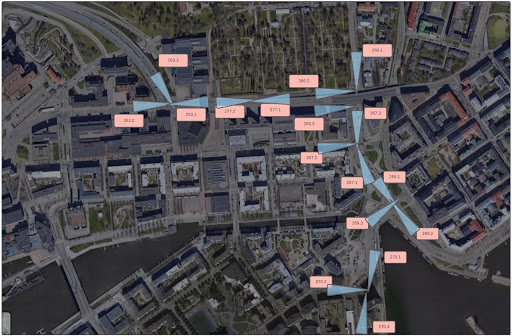
The solution combines IoT infrastructure, traffic sensors, camera systems and real-time data platforms to create an integrated AI-based intersection management system capable of detecting abnormal traffic situations, predicting congestion patterns and optimising traffic signal timing.
The platform technology supporting this approach was developed by Kentyou, a member of the Urban Technology Alliance (UTA). Both organisations – Urban Technology Alliance and Kentyou – are also partners in the MICAD project.
During the Helsinki pilot, 15 intersections were analysed, integrating data from multiple sources including traffic signals, sensors and mobility data providers. The system provided traffic operators with a unified dashboard enabling real-time monitoring of traffic conditions, early detection of potential congestion and more proactive traffic management.
By improving traffic flow and reducing time spent in congestion, such AI-based systems contribute directly to lower CO₂ emissions, improved road safety and more efficient urban mobility systems.
LESSONS FROM HELSINKI
The experience of Helsinki demonstrates how digital technologies can transform urban governance when they are integrated into strategic planning processes. By combining advanced digital infrastructure with climate policy objectives, the city has developed tools that allow decision-makers to evaluate urban interventions before they are implemented.
The use of a digital twin and the Energy and Climate Atlas illustrates how data-driven planning can support more informed climate and urban development policies. Through simulation and scenario analysis, Helsinki is able to test renovation strategies, energy efficiency measures and urban development scenarios before committing to large-scale investments.
At the same time, initiatives such as AI-based traffic management pilots show how artificial intelligence can be applied to operational urban systems, helping cities optimise mobility flows, reduce congestion and lower greenhouse gas emissions.
For other cities, the Helsinki case highlights the importance of developing integrated digital platforms that support both strategic planning and operational decision-making. Simulation tools, real-time data platforms and artificial intelligence can significantly reduce uncertainty in urban investments while improving the effectiveness of climate and mobility policies.
CONCLUSION: LEARNING FROM EUROPEAN CITIES
The experiences of Grenoble, Santander and Helsinki illustrate complementary approaches to urban innovation and climate transition.
Grenoble demonstrates how strong metropolitan governance and coordinated climate strategies can support large-scale adaptation initiatives. Santander highlights the value of treating the city as a living laboratory, where large-scale experimentation allows new technologies to be tested before wider deployment. Helsinki shows how digital twins, data platforms and artificial intelligence can support more informed urban planning and operational management.
Taken together, these examples underline a key lesson for cities: successful urban transformation requires not only technological innovation, but also experimentation frameworks, strong institutional coordination and data-driven decision-making.
Learning from these experiences allows cities to better design policies, test solutions and scale effective practices in response to the complex climate and mobility challenges facing urban areas across Europe.
Be part of a transformative movement towards inclusive climate and digital solutions. Together, we can shape sustainable metropolitan futures.
